Why I Put Brooklyn Coworking Spaces in Storefronts, Not on the Third Floor
Part two of three on building a coworking network in Brooklyn, neighborhood by neighborhood.
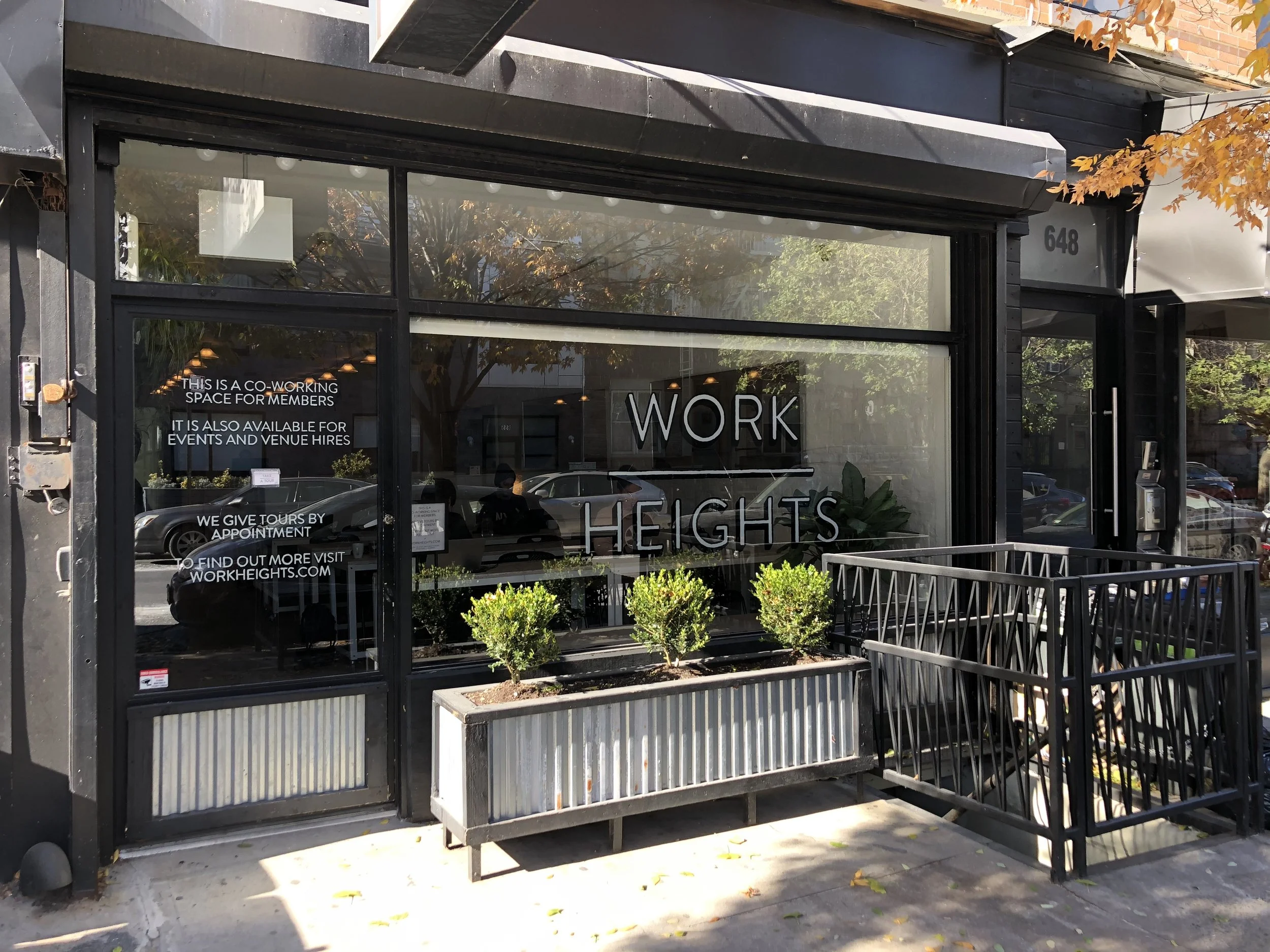
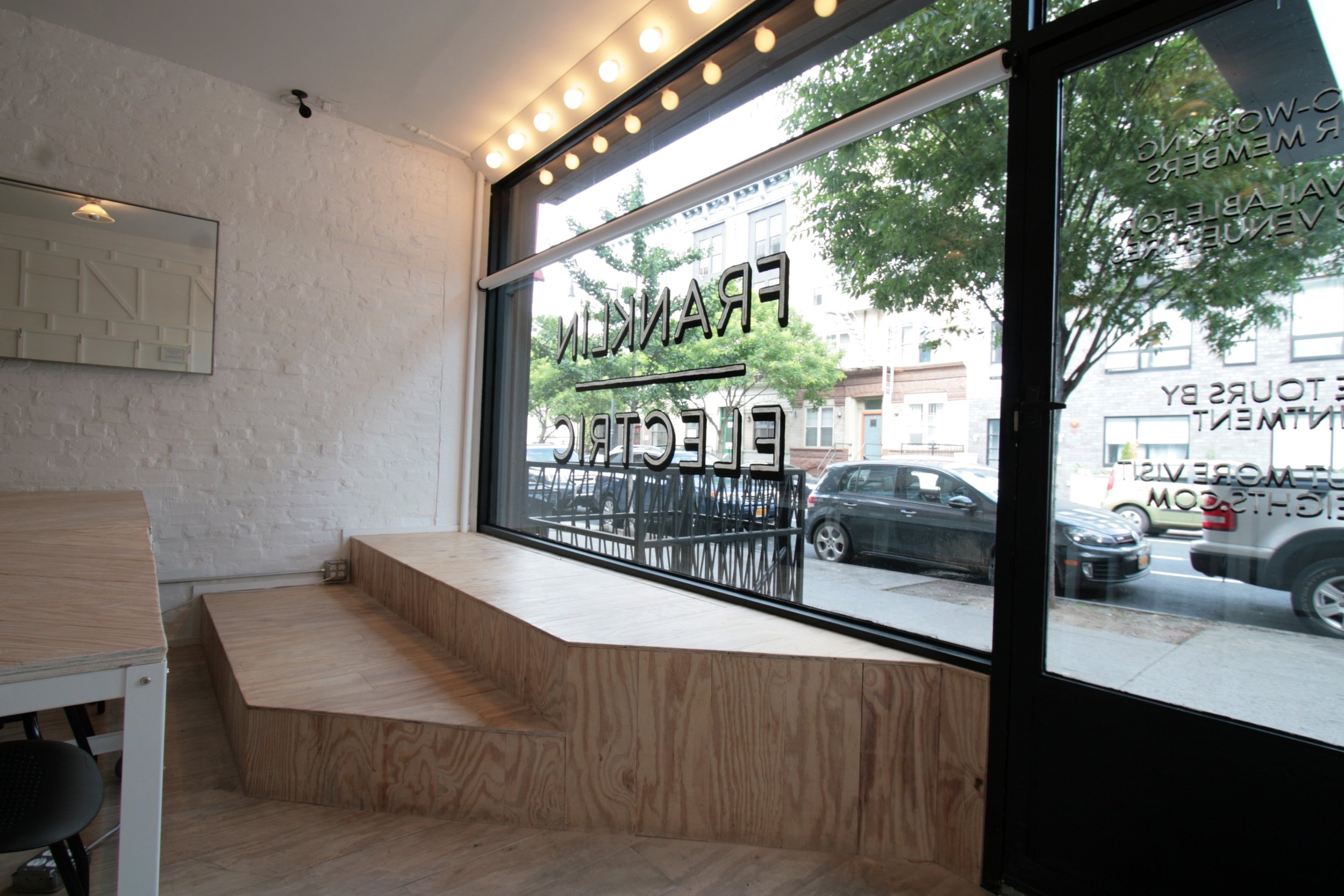
In the first part of this series, I wrote about building the first Work Heights out of a junkyard at 1037 Dean Street, and waking up a year later to a waiting list of 125 people. That list convinced me there was real, unmet demand for working in your own Brooklyn neighborhood. So in 2015 I opened a second location, ELECTRIC, in an old pharmacy at 650 Franklin Avenue. And as I built it, I started to understand exactly what made this different from every other office space around.
Working in the neighborhood, but invisible to it
Here is the thing almost nobody was doing in 2014 and 2015: putting workspace at street level.
If you were a freelancer or an independent business owner back then and you wanted an office, you were almost always relegated to a second or third floor in some office building. You might technically be working in a neighborhood, but you were sealed off from it. Nobody on the street saw you, and you didn't really see the neighborhood either. You were segregated up and away from the sidewalk, the storefronts, the actual life of the block.
I wanted the opposite. I wanted to activate storefront spaces, to put working people in the windows at street level, and in doing so create a dialogue between the street and the people working in the neighborhood during the day.
This mattered more than it might sound, especially in Crown Heights in those years. At the time, most people left in the morning to work in Manhattan or some other city center. The neighborhood went quiet during the day. By putting workers in a storefront, two things happened at once. The people still around during the day could see that there was life, that there were neighbors here working. And the people working could look up from their laptops and see the street, the neighborhood, the place they were actually in.
That two-way visibility was the whole point. It brought life back to the daytime neighborhood. Years later, after the pandemic, this became completely normal. In 2014, it was novel.
What the rest of the industry was building instead
The contrast with where the money was going couldn't have been sharper. Through 2015, WeWork's valuation climbed from $5 billion toward $10 billion as banks and mutual funds poured in capital, fueling expansion into Seattle, Washington D.C., Boston, and beyond. The dominant model was big floor plates in central business districts, optimized for density and scale.
The entire premise was that you'd travel to the workspace, that the workspace was a destination in a commercial core. The idea that the workspace itself should be a piece of neighborhood infrastructure, visible from the sidewalk, part of the high street, just wasn't on the table for the operators raising the headlines and the capital.
It took the rest of the industry years, and a pandemic, to come around to working close to home. By 2021 and 2022, the trade press was full of pieces about coworking moving into the suburbs and neighborhoods, operators racing to set up local hubs so people could work a short walk from their front door. One 2021 industry forecast put it bluntly: if you had a suburban or neighborhood space and you didn't have a waiting list, something was wrong. I'd had that waiting list since 2015.
A different idea of what an office is for
What I landed on, building ELECTRIC and the spaces after it, was that coworking in Brooklyn is inherently different from coworking in Manhattan. In Manhattan, you commute in, you work, you commute out. In Brooklyn, we were neighbors working together in our own neighborhood. That's a fundamentally different relationship between the worker, the workspace, and the place around it. It's community-based and local in a way that felt genuinely new, and genuinely exciting, to me.
So from then on, every time I looked for a new location, I looked for a storefront I could turn into a little high-street hub: a place for the neighborhood to come together, where we're visible to the street and the street is visible to us.
In the final part of this series, I'll get into what happened as that one storefront became a network of them across Brooklyn, and why being able to move between neighborhoods, rather than commute to a single tower, turned out to be the whole advantage.
Work Heights operates a network of neighborhood coworking spaces across Brooklyn, including Crown Heights, Bed-Stuy, Williamsburg, Boerum Hill, Prospect Heights, and Prospect Lefferts Gardens.