Why a Network of Brooklyn Coworking Spaces Beats One Big Office
Part three of three on building a coworking network in Brooklyn, neighborhood by neighborhood.
In the first two parts of this series, I wrote about building the first Work Heights out of a Crown Heights junkyard, and about why I became convinced that coworking belonged in storefronts at street level, woven into the neighborhood rather than hidden above it. This last part is about what happened when one storefront became many.
Over the years I built eight locations from scratch, all over Brooklyn, in this order: 2014 Crown Heights, 2015 Crown Heights, 2019 Clinton Hill, 2020 Prospect Heights, 2021 Bed Stuy, 2022 Prospects Lefferts Garden, 2023 Boerum Hill, and 2025 Williamsburg. I closed one, called KINETIC in Clinton Hill, in 2025. What I had left was a network, and the network turned out to be the point.
Brooklyn people move
Here's something true about living in Brooklyn: we don't just stay in one neighborhood. We love our neighborhood, but we move. Between neighborhoods, and sometimes into Manhattan. That movement is part of how life here actually works.
So the network was built around that fact. You might start your morning working in Crown Heights, then have a meeting up in Williamsburg in the afternoon, so you head up to the Williamsburg location and end up working there into the evening. Your day has movement in it. That's a level of dynamism that going to one office in a city center simply doesn't allow. A single tower, no matter how nice, is static. You go to the same lobby, the same floor, the same desk, every single day.
I found that static model genuinely unappealing, and I think a lot of people do, even if they've never named it. Being able to move through your own city during your workday, and have a real place to land in each neighborhood, is just a better way to work. The network gives you that.
Every neighborhood has its own culture, so every space does too
The other thing I learned building eight of these is that you can't, and shouldn't, make them identical.
Every neighborhood in Brooklyn has a slightly different culture. So even though the amenities are the same across all the locations, each space has its own vibe. That isn't an accident or a failure of consistency. It's a feature. I never wanted cookie-cutter spaces stamped out and repeated everywhere, the way a chain does it.
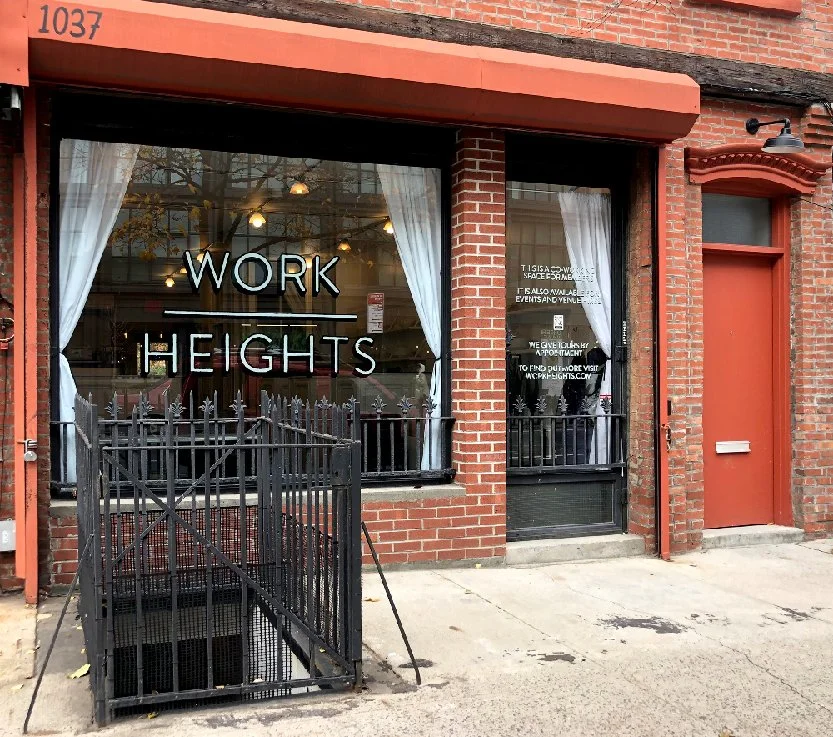
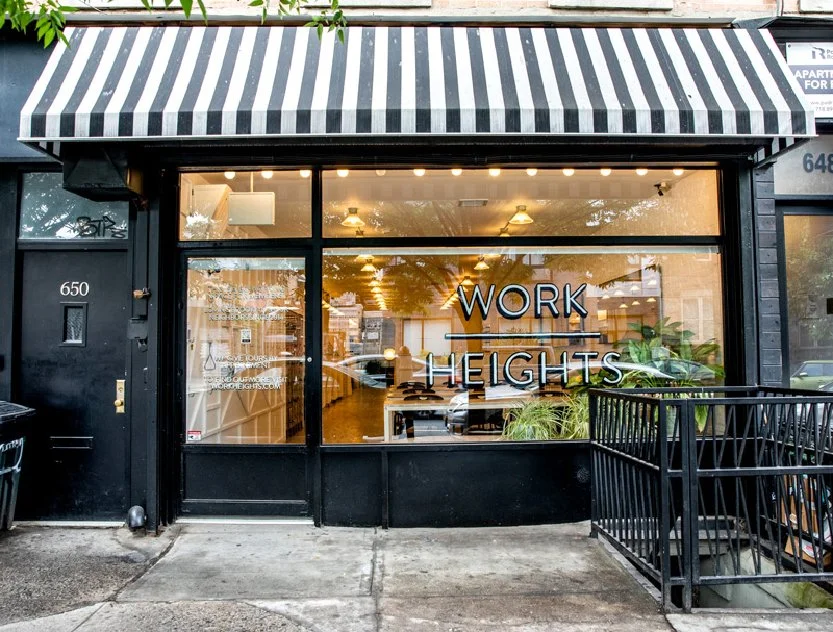
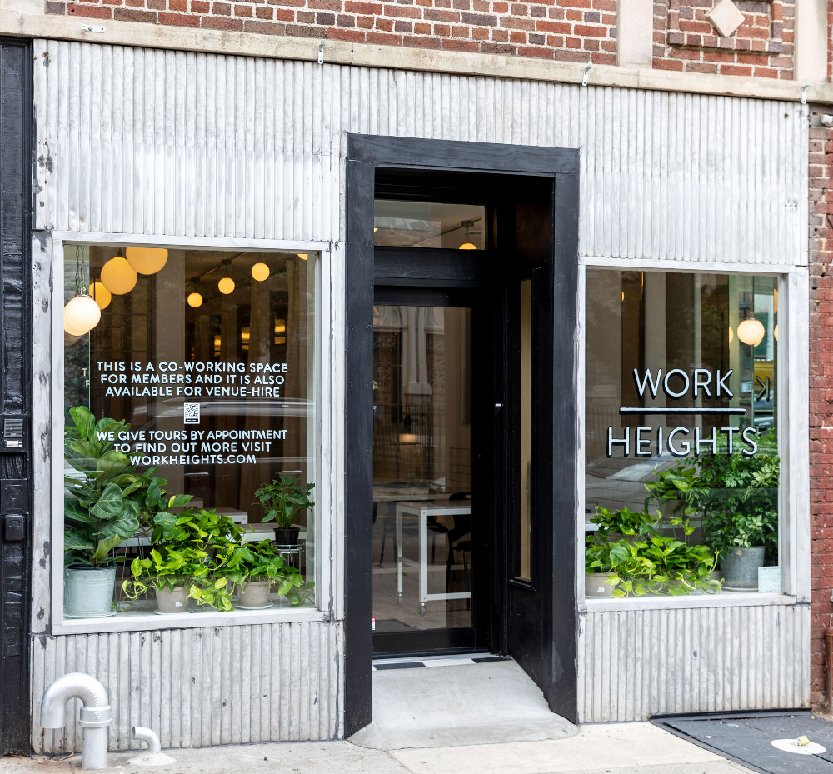
Instead, I design each space to react to the floor plan, to the building it's in, and to the neighborhood around it, so that it feels authentic to where it is and has a real sense of place. The reclaimed materials are part of that. The brick from Long Island, the farmhouse windows from Maine, the cubicles built from a salvaged tin ceiling at that first space in Crown Heights, these aren't just aesthetic choices. They're a refusal to make a place that could be anywhere. A Work Heights in Bed-Stuy should feel like Bed-Stuy. A Work Heights in Boerum Hill should feel like Boerum Hill.
The industry caught up to the idea
It's strange, in hindsight, how long it took the broader industry to arrive at neighborhood-scale, locally-distinct workspace. The dominant model of the 2010s was the opposite: maximum scale, maximum density, maximum sameness, planted in central business districts. WeWork rode that strategy to a $47 billion valuation by early 2019, then watched it collapse, pulling its IPO that September and eventually filing for bankruptcy in 2023 before reorganizing into a smaller, more sustainable company.
What replaced the grow-at-all-costs model, especially after the pandemic, looks a lot more like what I'd been building since 2014: spaces close to home, in neighborhoods, often carved out of existing local buildings, partnered with the businesses around them. By 2025, industry analysts describe suburban and satellite neighborhood hubs, and niche spaces with their own distinct character, as the defining trends of the sector. The generic, one-size-fits-all coworking floor is the thing now seen as dated.
I didn't predict a pandemic. I just started from a different question. Not "how big can this get," but "where do I actually want to work, and who are my neighbors." That question led me to a junkyard in Crown Heights, to a tin ceiling worth saving, to storefronts instead of third floors, and finally to a network of distinct neighborhood spaces across Brooklyn that let people work the way they actually live here: locally, visibly, and on the move.
Work Heights operates a network of neighborhood coworking spaces across Brooklyn, including Crown Heights, Bed-Stuy, Williamsburg, Boerum Hill, Prospect Heights, and Prospect Lefferts Gardens.